Saturday, May 21, 2022

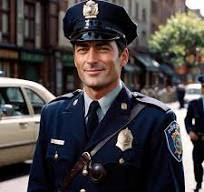
A Short Defense of the American Peace Officer


Anger. Stress. Sorrow. Repeat. This is the daily life of a cop, and the experts tell us stress kills, even minor stress that seems insignificant. 

Dr. Nicholas Christenfeld was a professor of psychology at the University of California in San Diego. Dr. Christenfeld conducted a study on the effects of minor stress on a person’s life. The professor and his colleagues looked at the names of people who had died in California during a 25 year time span. They found that those who had positive initials like WIN, TOP, WOW, etc. lived an average of almost four and a half years longer than those with neutral initials. On the other hand, those with negative initials such as DUD, SIC, PUD, etc. died almost three years earlier than the neutral group. Dr. Christenfeld‘s conclusion: even small sources of stress over a long period of time can affect your will to live. (LaTimes.com, “Bad Initials Can Be Hazardous to Your Health,” 31 March 1988)

In light of Dr. Christenfeld’s conclusions on the effects of minor stress on longevity, one must wonder how many years are taken off a cop’s life as the result of sitting with a victim who takes his last breath, or picking up the pieces of a fatality accident caused by a drunk driver, or suppressing emotions to get a confession from a murderer? 

The average life expectancy for a person living in the US is age 78 (Cdc.gov, 23 May 2011), but for a cop, the average life expectancy is a little over 66 years (Badgeoflife.com, 23 August 2011). That is a difference of 12 years on average. Those years are gone all in the name of justice, truth, protection of the weak, and the pursuit of righteousness. 

It is a great cost, but some still call us pigs and hate us while we seek to protect them and a way of life that is unique in a world that operates on corruption, intimidation, deceit, and preying on the weak. Police officers are people and like all people are subject to error, emotions, and impulse. Some overreact, some succumb to their emotions, and some are negligent; however, let us not judge the many by the sins of the few. The average police officer in the United States is devoted to truth, justice, service, and protection.

Please remember to pray for us, and ask the Lord to give us strength and wisdom to do our jobs with integrity, resolve, and wisdom, and if you have children, tell them to to be deliberate, honest, and thoughtful in their interactions with police. Give your children a good name to live up to, just as we as peace officers strive to live up to our name.


Friday, April 15, 2022

When Men Act Like Animals: Greenwood 1999 Part 2


Though they lived in the same complex, Pamela did not know Fred Taylor, but most of the residents did. As they saw the investigation unfold, they realized he was the man, and they were shocked.

Three days after the attack, Jay Long got the call he had been waiting for. It was the Texas Department of Public Safety. Every other state in the Union has a state police force, but Texas has the DPS. Trooper Jose Sanchez called from El Paso. The day before, Sanchez arrested Frederick Lavell Taylor on the Caddo warrant. Fred had been arrested within 48 hours of the crime. Jay Long’s hunch of sending a BOLO to El Paso paid off.

Trooper Sanchez was leaving El Paso Friday morning (the attack occurred late Wednesday night) and he noticed a green Camaro Z-28 parked on the eastbound side of I-10. The Camaro appeared to be abandoned, but he was too busy to stop and check. At 2 pm, Sanchez was westbound on the interstate, and he saw the Camaro still parked in the same place. This time someone was inside the car. Sanchez pulled his car on to the shoulder and walked across the median to the Camaro. 

He “visited” with the young, likable man behind the wheel, but he was very self-conscious. Sanchez said, “I noticed he was nervous and avoided eye contact with me.” The man did not have an ID, wallet, or any paperwork for the vehicle. Sanchez wrote down the VIN (vehicle identification number) and asked the man his name and date of birth. Fred answered truthfully.

Trooper Sanchez went back across the median to his car. It took several minutes to get there. He called dispatch and requested information on Taylor and the Camaro. He merged into the westbound traffic and drove to the next exit, crossed the interstate, and turned back eastbound so he could get behind the Camaro. As he pulled up, dispatch told him Frederick Lavell Taylor was wanted in Louisiana for aggravated rape and attempted first degree murder, and the green Camaro returned stolen from Louisiana.

The nice man was not just a motorist with car trouble. Frederick Taylor was wanted for rape and murder. He was a desperate criminal who could have fled on foot before Sanchez made it to the other side of the interstate, but he did not. He was still there, sitting in the car. Maybe he was exhausted. Maybe he was at the end of his rope. Either way, the trooper didn’t care. He got out of his car with pistol in hand and ordered Fred out at gunpoint. He handcuffed him, and placed him under arrest.

The Camaro was broke down as a result of a flat tire. Pamela’s car was pretty, but her tires were bad, and she didn’t have the money for new ones. Fred was hundreds of miles away from home with no means to change a tire, so he just sat there…all day long.

Sanchez said Fred smelled like a homeless person and seemed weak. He read him his Miranda warning, but Fred did not remain silent. He admitted to stealing the car but denied the homicide. However, the Trooper didn’t accuse him or anyone else of murder. Fred thought he killed Pamela Wednesday night. He checked her pulse to be sure. Everyone in Shreveport knew Pamela was alive, but he did not.  

To Fred’s neighbors, he was the guy next door…cordial and easy to talk to, and Trooper Sanchez felt the same way. He said, “He had a carefree attitude. At times he would giggle and smile. He was not aggressive at all. He would just laugh and smile and shake his head…” Up until May 19, 1999, Fred was a law abiding citizen.

The Trooper took a knife from Fred’s pocket. It was a cheap Spyderco knock-off, but good enough to be deadly, and there was blood on it. 

Trooper Sanchez had a friend who was driving down I-10 east bound earlier that morning. He saw a green Camaro and a man sitting on the hood. Sanchez’s friend stopped and offered Fred Taylor a ride. Fred accepted. As he sat in the passenger’s seat the friend noticed his wallet in one hand and the pocket knife in the other. The Good Samaritan pulled off the interstate when they came into town and drove straight to the police station. He was relieved to see Trooper Sanchez’s car in front of it. He told him Sanchez was his friend and would help him however he could. He pulled up behind the trooper’s car, and Fred got out. The man drove away, and Fred never went inside. He wandered around and eventually made his way back to the Camaro where the trooper found him. It seemed everything Fred did during those 48 hours was unreasonable. His escape was merely going through the motions, half-hearted at best, but just because he was passive in his capture didn’t mean he was regretful. He never took responsibility for his actions or showed any sign of regret.

Jay Long asked Sanchez to take photographs of Fred and his hands. There was a cut on his right hand where Pamela stabbed him.

Fred was in jail in El Paso, but the case was far from over. On Monday, May 24, 1999, two days after Trooper Sanchez’s phone call, Jay Long and Bill Duncan got on a plane for El Paso. Though Fred was cordial and talkative to the trooper, he wasn’t to the Louisiana detectives. Detectives want an alibi from their suspects, but he refused to talk to them. Jay had to go with what he had, but was it enough? 

How could a regular man lose all restraint and stalk, kidnap, rape, and murder a woman? Fred’s obsession for Pamela blinded him from reason. In what amounted to mere minutes on a Wednesday night, he changed the course of his life forever, but those minutes were forged over time in the fires of lust, envy, and entitlement.

Some cases are made with communication skills. Some are made from a multitude of circumstantial evidence. Some are made due to multiple witnesses or victims, but this case was made with forensics: a diligent review of a crime scene, collection of evidence, the electronic trail of a cell phone, and a trail of blood left by the victim and offender. Fred left a dirty house, and the detectives cleaned up after him, but even though forensics made the case, the timing was controlled by the detective, and timing is everything. He wrote down a plate number which led him back to Fred’s car, and a witness who told him about the box of clothes in Fred’s apartment. When Jay Long had the information on Pam’s stolen car, he placed it in NCIC. The moment he had a suspect, Jay wasted no time securing a warrant for Frederick Lavell Taylor in the middle of the night. As soon as the warrant was signed, he put the information into the national computer and sent the information on Fred Taylor and Pamela’s car to the El Paso Police Department. Hours later, he had his man. Any delay in retrieving the cell phone information or getting the warrant could have changed things drastically.

The El Paso Police Department searched Pam’s car. Just like Pamela’s and Fred’s apartments, it was full of forensic goodies. The evidence, including the pocket knife he had on him when he was arrested, would be used to nail down the case.

Fred was in jail, waiting for a free ride back to Caddo Parish. He initially fought extradition, but after a few days in the county jail in El Paso, he changed his mind.

Jay interviewed half a dozen residents of the Woodlands Terrace Apartments. Nothing earth shattering came from the interviews, but several things were corroborated. The way Fred attacked Pamela, it may have seemed like he was sexually repressed, but the investigation showed that was not the case. The day before he attacked Pam, Fred had sex with one of his neighbors and referred to her as his “baby”. There is no way to know why he targeted Pam. Maybe he thought she was unattainable. 

The recording of the detective’s interview with Pamela was transcribed by the Caddo Parish Sheriff’s Office Transcriptionist. Though she transcribed hundreds of recorded interviews in her career, Pamela’s interview was unforgettable, a real life horror story. The transcriptionist noticed the way Jay spoke to Pamela. She said, “That was the most compassionate interview I have ever heard.” 

Fred was indicted by the Grand Jury on June 16, 1999. Before the end of the month, he pled not guilty to aggravated rape. The only sentence for the charge was life without benefit of parole. Though a guilty plea would not have rescued Fred’s character, it would have been the right thing to do, but it was too late for that. His trial was big and expensive. Jurors were chosen. Witnesses were called. Evidence was presented. The trial convened on December 13, 1999, only seven months after the crime took place. Jay Long was the prosecution’s main witness. 

There are two types of evidence that make up a criminal case: circumstantial and real. Circumstantial evidence is the circumstances and events in a case that lead reasonable people to believe a person has committed a crime. It includes witness statements, eyewitness testimony, and even the statements and behavior of the accused. A case with nothing but a small amount of circumstantial evidence will never go to trial, but the case against Fred had a lot of circumstantial evidence: 


  1. Fred lived near Pamela,  
  2. a witness heard him say, “I’ll have her no matter what,” 
  3. he was known to watch Pamela from his apartment, 
  4. he had her cell phone and made phone calls on it, 
  5. he told two women he was on the run because something bad happened,  
  6. he called a friend and asked him to dispose of a box of bloody clothing in his apartment,
  7. he was arrested while sitting in Pamela’s stolen car, and
  8. he had injuries and a bite mark on his hands.


In addition, Fred’s case also had real evidence. Real evidence is of a material nature that applies to the case which has real, physical substance. It encompasses physical evidence, trace evidence, and biological evidence. Real evidence can be seen, read, heard, and touched (even though it might be small). Though Fred never made a verbal confession, his handiwork was all over the crime scene, his apartment, and elsewhere. Some of the more important real evidence included:


  1. his fingerprints were found on the broken glass of Pamela’s rear window,
  2. his blood was found on the same window seal,
  3. her blood was found on his clothing in his apartment, 
  4. her blood was found on Fred’s pocket knife which was on him when he was arrested, and
  5. his semen was found on Pamela.


DNA was a relatively new phenomenon in Caddo Parish in 1999, but it had a huge impact on the case. Pamela’s blood cried out from the scene, from Fred’s clothing, and from his pocket knife. Due to the multitude of evidence, Fred told all without opening his mouth.

The glue that holds all evidence together is corroboration. Corroboration has to do with all of the evidence supporting the end result. Ultimately, corroboration is the verification of every point of evidence. It takes into account how, when, and where evidence is collected. It scrutinizes witnesses, victims, and even the suspect’s testimony to make sure it applies to the case.

Pamela, a true survivor, testified in court. She identified Fred as the man who raped her, stabbed her repeatedly, and left her to die. Fred’s defense attorney pulled no punches when cross examining Pamela. He suggested she had consensual sex with the man who broke in her home, raped her, and did his very best to murder her. Pamela’s family did not take kindly to the lawyer’s innuendo. It was an insult to any victim, especially one who had been through so much.

The Caddo ADA, Bruce Dorris, used every bit of real evidence in the trial. Bruce presented the case the way a carpenter constructs a house. He framed it, roofed it, put sides on it, insulated it, and furnished it. The house that Bruce built proved to be air-tight. In a short deliberation, Frederick Lavell Taylor was found guilty of aggravated rape two weeks before Christmas. Judge Crichton sentenced him to life without benefit of parole. 

Just before the trial, Pamela came to visit Jay Long. She thanked him for his kindness and hard work, and she gave him a small statue of a detective in his office at work.

It is sad when a happy ending puts a man in jail for the rest of his life, but it is a reminder for us all to be cautious with our feelings and impulses. We look forward to a day when the lion will lay down with the lamb, and the weapons of violence are fashioned into works of art, but until then, the men and women of law enforcement are essential for our protection. 


Jay Long is currently Chief Deputy of the Caddo Parish Sheriff’s Office.


When Men Act Like Animals: Greenwood 1999 Part One


Chief Deputy Jay Long


 The spring of 1999 was a watershed year in law enforcement history. On April 20th (Adolph Hitler’s birthday) the United States suffered its worst school shooting in history. Columbine High School near Denver, Colorado, was invaded by two murder obsessed students who killed 13 people and injured another 21 before killing themselves.

Experts blamed the school murders on video games, guns, and working parents, but cops know better. Sometimes evil is so cunning that no amount of prevention can keep it from occurring, but even though there are times evil cannot be stopped, it can be curtailed. That is where cops come in, and despite the bad press, the American police officer is the greatest, most balanced peace keeper in the history of mankind. Evil happens, but it the goal of law enforcement to prevent, control, and isolate it whenever possible. 

In addition to record school violence that year, there were natural disasters. Caddo Parish hosted an F4 tornado on Easter, April 3, 1999. The tornado slammed into downtown Shreveport before crossing the river into Bossier Parish where it unleashed most of its wrath. The First Methodist Church in downtown Shreveport lost its steeple for the first, but not last time, and historical buildings on the river front were destroyed, but far worse than material damage, seven people were killed and 112 were injured.

By May, things were quieter but not for long. Late one Wednesday night, Detective Jay Long was the on call detective in Caddo Parish. Jay was called to Greenwood, Louisiana on a stabbing. 

A stabbing call has many possibilities, and Jay ran through them in his mind as he drove to the scene. He thought about who to notify, securing the crime scene, and locating the knife. Was the victim a battered wife? Where was her husband or boyfriend? Mental preparation can make the difference in officer safety, the safety of others, and can have a significant bearing on the outcome of the investigation.

Greenwood is a small town west of Shreveport. In the late 20th century it was a growing suburb on Interstate 20 just five miles from the Texas line. Greenwood was best known for truck stops and video gaming. 

On May 19, 1999, Greenwood Officer Donnie Aaron was on midnight shift when he was called to the stabbing at Woodlands Terrace Apartments on Highway 80 in downtown Greenwood. Since Greenwood only had a handful of officers, major crimes were handled by the Caddo Parish Sheriff’s Office. 

Donnie met paramedics from Fire District 3 at a scene which was far worse than he expected. In his report, he said a female, “… was only slightly conscious and unable to give a detailed description of events. However, she did state he or they were ‘waiting for her inside’ the apartment.”

Deputy Stuart Talbot of the Caddo Parish Sheriff’s Office pulled up as Pamela McThorn (not her real name) was being loaded into the medical helicopter. Moments later, she was flown to Louisiana State University Medical Center in Shreveport. 

Stuart hunted large game since he was a child and described the blood outside Pamela’s apartment as, “…the blood trail of a deer.” There was so much blood, he was surprised Pamela lived long enough to be transported to the hospital. Her hope of survival was slim. Stuart covered the area with yellow tape believing he was protecting the scene of a homicide.

Around 11 pm that night, two women heard moaning and cries for help outside their apartment and found a woman lying in a pool of blood under a tree near an apartment building. It was several minutes before they realized the woman was their friend Pamela. 

Jim Hardy pulled into the parking lot after a long night at work and was met by the hysterical women. They pointed to the woman on the ground, and without hesitation, Jim ran over and found his friend Pam. When he saw her desperate condition, he ran to his apartment for the phone and called 911. He told the dispatcher Pam had multiple stab wounds. She told him help was on the way and to apply direct pressure to her wounds until they got there. Jim grabbed some clean towels, ran back to Pamela, and applied pressure to the gash on her throat and the worst wound in her abdomen. At the very least, his quick response prolonged Pamela’s life.

Jay Long arrived before midnight to a scene that looked like a slaughter house. Donnie from Greenwood PD told him what he knew along with some new information: Pamela’s 1995 Chevy Camaro Z-28 was missing. Jay put out a BOLO (Be On Look Out) for the car. He talked to the witnesses on the scene, including Jim Hardy. When Jim pulled into the apartment complex, two frantic women met him at his car door. They took him to Pamela who was lying in the grass and “bleeding all over.” Her throat had been cut. He ran to his apartment and dialed 911. The operator told Jim to apply direct pressure to her wounds. He grabbed some towels, returned to Pam, and followed the dispatchers orders. Groggy but conscious, Pamela told him a stranger was waiting for her when she came home. He stabbed her, then raped her.

The call came out as a stabbing, but it was far worse. It would likely be a homicide before sunrise.

Caddo Parish Sheriff’s Office Crime Scene Investigator Jay Duke arrived. Duke did a 360 of the scene and found the back window of Pamela’s apartment shattered. The front door was locked, dead bolted. Duke met with the apartment manager about a key for the apartment while Jay continued interviewing witnesses.

The Camaro Z-28, was well known. Every resident had an assigned parking place, and the women who found Pam saw her car parked in her spot at 10:55 pm. Minutes later, they heard cries for help, and Pam’s car was gone, so they didn’t realize the screaming woman was Pam.

The apartment manager gave Jay the key to the apartment. He and the other deputies went inside, cleared it, and secured it until CSI was ready to search. There was no one inside, but it was obvious something happened there. 

Jay called his Sergeant, Lynn Allen. Lynn was a 15 year veteran of the Sheriff’s Office. Both Jay and Lynn were on the SWAT team, and Lynn was the commander. A short time later, Lynn and Lt. Bill Duncan arrived on scene. Bill was the former SWAT team commander and had a lengthy narcotics background. The four deputies, Jay Long, Jay Duke, Lynn Allen, and Bill Duncan surveyed the scene. When they got to Pamela’s apartment they started their search at the back window. The shattered panes had been painstakingly removed and placed on the ground. Some of the glass had finger prints on it, and just inside the window seal, they found what looked like a drop of blood. Whoever broke into Pam’s apartment cut himself and touched the glass from the window with his bare hands. It was a Crime Scene Investigator’s dream, but it would not immediately identify a suspect.

Inside was Pam’s bedroom. The mattress from the bed was pulled half way off the box springs. Jay noted, “It was obvious a struggle had taken place in the room.” There was blood on the bed, the covers, and the pillows. A night stand was turned over. A cordless phone was on the box spring with the battery hanging out. There was blood on the phone and carpet nearby.   

Jay found an empty Newport cigarette wrapper in the kitchen. There were ashes on the counter and floor. There were diet Cokes in the refrigerator, and in the bathroom he noticed an empty diet Coke can in the garbage with ashes and a cigarette butt inside. Pamela’s family told him she did not smoke, nor would she have allowed anyone to smoke in her apartment. Jay bagged the remains of the cigarette and the empty can.

The trail of blood went out of the apartment and ended under a pine tree where she was found. Beside a pool of blood was a cigarette lighter and bloody shirt. CSI took photographs and bagged the lighter and shirt. 

Coincidentally, two women who worked for Pam noticed her car going west toward Texas on I-20 just after 11 pm. They wondered where she was going at such a late hour. They didn’t know she wasn’t in the car; she was fighting for her life under a tree.

The detectives spent the entire night searching Pam’s apartment. At 7:30 the next morning, Jay Long walked outside to the parking lot as a dark four-door, Buick Electra pulled in. A woman was driving and a teenager was in the passenger’s seat. The car passed within a few feet of Jay, but the teenager never looked at him. Jay wrote down the plate number of the Buick. A couple of minutes later, the woman left the apartments alone. Lynn Allen saw the teen who was with her by building D, looking under the hood of an old two door Dodge. Moments later, he drove away in the car.

Jay called the hospital. Pam had ten stab wounds to her abdomen, a puncture wound to her back, and a slash across her throat. Her liver, diaphragm, and pancreas were punctured, and she came dangerously close to bleeding to death. Fortunately, the artery in her neck was not severed. The doctor who performed her surgery told Jay it was a miracle she was alive. After patching up her wounds, he preformed a rape kit on her. The kit showed the presence of semen, but it would take months for the lab to come up with a profile. 

Statistically, women are murdered most often by their husbands or boyfriends, but due to the burglary of her apartment and the fact her exes had alibis, Pam’s case did not fit the regular pattern. It appeared she had been raped by someone who stalked her, broke in her apartment, and waited for her. 

Pamela was in Intensive Care at LSU Medical Center. Her neck was thickly bandaged, and her eyes were black. The only way Jay could tell she was alive was to watch her chest rise when she took a breath. He gently woke her and pressed record on his cassette recorder. He introduced himself, and recorded the date, time, and location. She was able to speak but was in and out of consciousness. She did not drink or smoke, but she liked to go to clubs and bars to dance. On May 19th, she went to the Cactus Canyon club in nearby Longview, Texas. She came home alone around 10:35 pm and locked the dead bolt behind her. As she walked down the hall, a black male with short hair came up behind her and pushed her into her bedroom. She screamed and fought, but it wasn’t enough. He told her, “Shut up or I’ll kill you.” 

She believed him, but some things are worse than death. She grabbed the telephone to dial 911, but he took it from her and disabled it. “You crazy bitch, I’ll kill you if you don’t shut up!” He forced her to the floor. When he laid his knife on the bed, she grabbed it and slashed at him, but he overpowered her, took it away, and stabbed her repeatedly. Convinced he would kill her, she had no choice but to lay still and pretend to be dead while he raped her.

With his deed done, he ordered her to get dressed. He found her purse and took her car keys. He twisted a t-shirt, stuffed it in her mouth, and in the cover of darkness, grabbed her arm and led her out of the apartment to the car. Pam realized nothing good could come from leaving with him. She would die before becoming a disposable slave. She broke free and ran. At the corner of the building he caught her, pulled out his knife, and, “…started killing me.”

Refusing to give up, she broke free again, making it to the back of the apartment building before he caught her, stabbed her, and slit her throat. When he thought she was dead, he left. Pam, still conscious but weak from blood loss, crawled to the front of the building seeking help. 

The interview was difficult. Jay wrote, “Pamela was traumatized giving her account. I noticed her heart monitor increasing as she gave her statement and lost consciousness, and I could not obtain any additional information.”

 Jay and Bill Duncan spoke to her friends and family at the hospital. They told the detectives Pamela had a cell phone, but it was missing. Jay got a subpoena for the phone records. 

In 1999, cell phones were becoming more common, but only a third of the US population had one. Pam’s missing phone was good news, but only if the suspect had the phone, and the records could be accessed immediately. Jay received the phone records later that day. 

The last time Pam used her phone was the day before the attack. After the attack, eight calls had been made. Caddo DA’s Office investigators spoke to two women who received calls from the phone. Both of them talked to the same man: Frederick Lavell Taylor. 

Fred Taylor was a resident of Woodlands Terrace Apartments. He lived in Building D, apartment 24. He told the women he was in trouble, had blood all over him, and was driving a Camaro headed to California. The women told investigators Fred owned a 1979 Dodge Magnum, and he smoked Newport cigarettes. The crime lab would compare the DNA from the cigarette butt Jay found at the apartment to Fred’s DNA profile.

Jay went to Fred’s apartment. The door was locked. There was a light on, but no movement inside. At the apartment door he found a pair of men’s basketball shoes, white with black trim. The right shoe had a sticky substance about the size of a quarter on it. It looked like blood. He seized the shoes and had a deputy watch the apartment while he wrote a search warrant.

Jay believed Fred Taylor’s 1979 Dodge was the same car he saw leaving the apartments that morning. The black male driving was dropped off at the apartments by a female in a Buick. Jay thought it was suspicious, so he wrote down the plate number. The owner of the car lived nearby. Jay and Bill Duncan found Fred’s car in front of the Buick owner’s home, and the young man who drove it from the apartments was sitting on the front porch. They read him his rights and asked about Fred Taylor’s car. The man worked midnight shift at a local truck stop. Fred called him in the middle of the night and asked him to get a box of clothes out of his apartment and destroy them, and if he did, he could have his car. Fred told him how to attach a wire to the battery under the hood to get it started. He looked in Fred’s apartment through the window and saw the box of clothes, but the door was locked. He wasn’t about to break in because there were half a dozen detectives around the corner. Though he didn’t get the clothes, he took the car anyway. 

The detectives had the Dodge towed to the storage yard. Jay wrote an arrest warrant for Frederick Lavell Taylor for aggravated rape and attempted first degree murder. He also wrote search warrants for Fred’s apartment and car. Shortly after midnight on May 21, 1999, Caddo District Judge Scott Crichton signed the warrants, and Jay issued a BOLO for Frederick Lavell Taylor in the the national computer that supplies information to all law enforcement agencies in the US. He also sent an additional teletype for Fred and Pamela’s car to area law enforcement agencies and on a hunch, to El Paso, Texas. A fleeing felon from Louisiana could drive the interstate all the way to El Paso and escape across the border into Mexico.  

The case was just over 24 hours old, and the suspect had been identified, a warrant was issued for his arrest, evidence had been gathered, and more evidence was forthcoming. After being awake for over 36 hours, the detectives got some rest. The next day, they searched Fred’s apartment.

There was a reason why Fred wanted his friend to destroy the clothes in his apartment. The cardboard box by the front door contained a white t-shirt, white pair of underwear, and a pair of black wind pants. In addition to blood, the underwear had suspected semen on it. In addition to the clothes, detectives found an empty pack of Newport cigarettes, a soda can used as an ashtray, and a towel with blood on it. On the bedroom door and a section of baseboard, there were traces of blood. The detectives collected the evidence along with Fred’s hairbrush to compare DNA. There was no evidence found in the 1979 Dodge Magnum.     

Jay went back to the hospital to talk to Pamela. She had a difficult night but was out of ICU and in a room. Jay interviewed her again, and this time she was able to remain conscious and provide additional details. Her attacker was wearing a white t-shirt and dark wind pants, and during the initial attack, she bit his hand. Though he beat her violently and stabbed her, he called her “baby” several times. When she could no longer continue to fight, she knew he would rape her, but she made one last appeal, “Please don’t do this! You don’t even know me, I don’t know you. Don’t do this to me!” 

To silence her, he gagged her with a t shirt.

When he finished raping her he demanded her purse. He took her credit card, some money, and keys. He forced her to the door and told her he was going to take her somewhere to clean her up. They walked out, and he dead bolted the door. He led her to her car, but she knew if she got inside he would rape her until he tired of her, torture her, and kill her. She fled, running as best she could in her condition, but he caught her and stabbed her. She broke away, but he caught her again and slit her throat. The fight was over. She begged him to leave her alone and let her die.  

She lay still, but he would not leave. Though she did not have much blood left to pump through her veins, he checked her pulse. He left but only for a moment. She pretended to be dead. He checked her pulse again. Her pulse was slow enough to fool him, so he left. If she could only sleep there would be peace, but he returned for the third time and checked her pulse again. Convinced she was dead, he left for good. When she realized he was gone, she called for help. The only person she remembered seeing was Jim. 


Tomorrow: Part 2
Friday, March 18, 2022

The Kwik Check Food Store Robbery 1980

 On February 27, 1980

There was once a convenience store near Hillcrest High School in front of the Pepper Tree Apartments called the Kwik Chek Food Store. It was a strange place for a convenience store, or any store for that matter, being several hundred feet off Raines Road, by some trees at the back of the baseball field across from the high school. It’s seclusion caused it to suffer more than it’s share of robberies until 1980 when the manager used a baseball bat to ward off several would-be robbers. Frank Carimi was a tough fifty eight year old ex-Marine who was reminiscent of a popular movie star of those days, Robert Conrad. The manager’s zeal gave the store a reputation as a place for thieves to avoid, so local robbers looked for an easier target, but on February 27th, a lone male bravely entered the story brandishing a pistol. Rather than being deterred by the manager’s heroics, the young man considered the store a challenge to be conquered. He pointed his pistol at Carimi, but the manager was undaunted.


Carimi, unwilling to let any punk rob his store, raised his bat, but the robber took careful aim and pulled the trigger. Somehow the robber kept his pistol on target through the chaos and sent a bullet through the barrel, striking the manager a fatal blow. Frank Carimi dropped, never to rise again. 


The robber turned his pistol on a teacher from a nearby school who was shopping and fired a second time. The weapon hit its mark again, but this time the wound was not fatal. In a room filled with smoke and the smell of powder, the robber deftly took the money from the till, then robbed five other customers of their cash and got away. 


He was unmasked, and there were multiple victims, so the Memphis Police did a quick composite drawing. Within days they identified the armed robber as nineteen year old Phillip Dorrough who lived across the street in Graceland subdivision. Dorrough was a recent graduate from Southern Baptist Educational Center and a member of Graceland Baptist just down the street on Raines and Milbranch. The police wrote a first degree murder warrant for Dorrough. Unable to find him, they interviewed his 17 year old girlfriend in nearby Germantown. When they found out she lied about his whereabouts, they arrested her for accessory after the fact. Later, Dorrough turned himself in and was convicted of first degree murder. He served his time and was released from jail several years ago.


Thursday, February 17, 2022

Wise Fool


The word sophomore means wise-fool in Greek. Some would say the latter half of the definition was an apt description of me as a 15-year-old in high school. Back then, I didn't see it that way...

On my first day of English class in 1978, I sat with my friends in the corner of the classroom by the window. While our teacher Mrs Seay was arranging the room and preparing for the new school year, we drew pictures, talked, and laughed the entire hour. The next day was much the same. By day three, we thought things would continue that way forever, but Mrs Seay made an unexpected announcement. 

At home the night before, our good teacher spent her discretionary time making a seating chart. In the new seating arrangement, I was no longer sitting by the window with my friends. Now I was in the middle of the room between virtual strangers. Mid-way through our first week, Mrs. Seay (pronounced C) made a tactical move to restore her status as the leader of her sophomore English class. I considered her mandate an example of tyranny in its lowest form. Sitting beside unfamiliar people placed us at a huge disadvantage, and Mrs Seay's behavioral expectations were beyond my ability to conform.

Under the new arrangement, I sat next to James (not his real name). James was quiet, neatly dressed, and his hair was combed and cut to regulation. In front of him was Kim Evans, and in front of me was Michelle Robinson. Kim and Michelle were pretty girls: Kim was a cheerleader, and Michelle was a genius. I wasn’t used to sitting next girls, especially girls of their caliber.

As the year progressed, we got used to Mrs Seay’s teaching routine which alternated between teaching from the book behind the podium to giving us assigned exercises at the end of a chapter. One day Mrs Seay stepped away from her podium and went to her desk. While her back was turned, I loaded a rubber band with a paper wad and shot it across the room. It landed against the back wall with a thud. The boys across the room returned fire.

Mrs Seay turned around, the air was filled with confetti, and the class fell silent.

“Mickey McDaniel…go to the office!”

Until that moment, I thought of Mrs Seay as more of a grandmother-figure than a teacher, but now she took charge. Suffering is easier in a group, but she singled me out. Instead of whining, I held true to the creed of manhood and walked out of the classroom alone, like Gary Cooper in High Noon.

The office was directly across the hall. I stepped in and announced myself. The secretary was unimpressed. She told me to have a seat. I was the only one there, but I would have to sweat it out for at least 10 minutes; the time necessary for me to meditate on my transgressions.

Our principal was Bill Maclin, a coach who worked out regularly. His hair was blond, and he parted it across his head like a comb over, but he wasn’t bald. He didn’t smile and according to rumor, he could swing a paddle like Johnny Bench swung a bat.

My quiet meditations changed my attitude, but it was too late, and I wasn’t sorry for what I did, just for getting caught.

A lower classman walking down the hall saw me in the office. He stepped to the side of the door frame, out of sight of the secretary, and whispered, “What are you in for?” 

“Paper wads...”

“A-h-h-h man. Not that...”

The principal's door opened, and the big guy appeared. He stared over the top of his glasses and waved me in. When he shut the door, he asked why I was there. Of course, I had no idea. Without wasting a second of time with an investigation or lecture, he took his paddle from a nail in the wall and told me to bend over and grab my ankles. I braced myself, keeping my knees bent to keep from being knocked into the bookshelf.

The first blow stung like a wasp and caused my ears to scream. My attitude changed instantly. I was sorry. 

I preferred to get my punishment over with quickly, but it was severe. Before I could catch my breath, the hammer dropped again. Now I was sorry for every sin I ever committed, but before I could recover, the third blow fell like lightning, and I was reduced to tears.

Without a drop of sympathy, Mr Mac raised his left eyebrow and squinted his right eye. “Go to class and straighten up.”

That was it, in less than 60 seconds. 

I hated the old man, but inside I knew I got what I deserved. He was teaching me a lesson on disobedience and justice, but it would take years for the lesson to sink in. Mr Mac didn’t play, but he never mistreated me.

There was no time to lick my wounds. My classroom was only a few steps away. The secretary heard what happened in Mr Mac’s office. When I came out, she smiled for the first time that day. I hoped she wouldn’t call my mother and tell her what happened.

I stepped into the hall, pulled out my handkerchief and dried my eyes. Dragging my feet, I took a deep breath and walked to the classroom with my tail tucked between my legs, limping without looking up.

James sat next to me in class. I knew him for years, but we weren’t friends until that year. He was quiet, but thanks to the seating arrangement, we talked every day. He was polite and mature, and good grades were no problem for him.

Every kid spends their school years looking for an identity. Years earlier, my brother, who thought manhood was all about speed and strength, told me the toughest guys in school were wrestlers. When I reached high school, the logical thing for me was to join the wrestling team, but James found his identity in a different way.

James and I played baseball on the same team when we were kids. I thought he was better than me, but he gave it up in junior high. Most kids experiment with alcohol, but James told me it wasn’t for him. Instead, he found something better. I was surprised when he told me he smoked marijuana.

I thought kids who smoked marijuana were rebellious, aimless, and apathetic, but James was none of those things. He was one of the most responsible kids I knew. He told me he and his friends in the neighborhood met in the woods behind his house after school and smoked marijuana, and it was the best time of his life. It didn’t make him lose control, forget things, or break the law. Instead, it removed his inhibitions, helped him be himself, and even helped him think. James made it sound adventurous. He was smart, well behaved, and didn’t get in trouble at school. Maybe  marijuana wasn’t as bad as I thought.

Every day James told me about his experiences, and I began to envy him. He asked me to meet him after school. One afternoon in March, I met him in the woods behind his house. 

It was prematurely warm and windy; one of the first nice days after winter. I found James just like he promised, with three of his friends climbing on a giant, uprooted tree that was leaning against another tree. There was a rope tied to a tall branch, and they were swinging from it. I climbed up the tree and swung on the rope with them. James was an introvert at school, but at home, he was adventurous and a leader. His friends quickly became my friends.

When we finished swinging, James pulled out a joint from the base of the tree where he had hidden it earlier. He lit it and passed it around. I was having the best time I had in a long time, and I didn’t see how getting high could make it any better. The boy next to me offered me the joint, but I waved him off. It was enough to just hang out with friends and have fun, but my abstinence was unwelcome. The fun was over. I was no longer a part of the fraternity. Now I was an unwelcome stranger and potential whistle blower. James and his friends left me sitting on a stump. I went home thinking I was a failure.

After being humbled by Mr Mac’s paddle, I determined I would never feel that kind of pain again, and I was true to my promise. However, one day Mrs Seay sent me to the office again for more foolishness.

I swaggered out the door like before and shut it loud enough to defy but not so loud it would cause me additional grief. I knew my sentence, and there was no reprieve, so instead of going to the office, I ducked low past the doorway to hide from the secretary and sprinted down the hall to the locker room by the gym. The PE class was outside playing softball, so it was empty. I pulled off my shoes and pants, opened my PE locker, and got two pair of gym shorts and a towel. I threw on the shorts, and to be safe, tucked the towel between the shorts. I redressed, ran back to the office, and walked in nonchalantly. My detour took less than three minutes.

“You again?”

“Yes ma’am.”

She buzzed Mr Mac. “Mickey McDaniel is here from Mrs. Seay’s class…again.”

Ten minutes later, the big guy appeared. He looked taller, and his jaw was tighter than usual. He asked why I was there. I had no idea.

Having failed to correct my behavior the first time, he was compelled to make a better impression and correct my waywardness. I received the full wrath of the Principal, but due to the padding, it was pain free, and the usual smack of the paddle when slapped across my tender arse was reduced to a thud. It was so obvious, I was afraid he noticed, so I wiped my eyes and limped out of the office. When I got to the hall, I picked up my step, stuck out my chest, and returned to class as Gary Cooper.

I once thought Mrs Seay existed to keep me from having a good time, but by the end of the year, my attitude changed. Despite my resistance, I was learning. Grammar started making sense, and I appreciated good literature.

The last week of school, Mrs. Seay wrote in my yearbook in script handwriting. “Mickey, You are a sharp guy with great intelligence. I will continue to watch your life with great interest as you decide what to do with your future. God bless! Mrs. Seay, Jeremiah 33:3.”

There are not many people who watch your life with interest or think a dull kid is sharp. Those people should not be forgotten. 

The most important lesson of my sophomore year happened out in the woods one afternoon, but overcoming peer pressure in the classroom proved more difficult for me. I wish now I had the same fortitude in public as I had in private because the day in the woods was pivotal for me. Afterwards, I never again felt pressured to drink or do drugs.

How does the kid who pushes the limits in the classroom refuse to smoke pot while the one who is compliant in class smokes it every day? 

I guess I was a wise fool after all…


Friday, January 21, 2022

Two Gun Crowley and the Knowledge of Good and Evil


 In the fall of 1931, Francis “Two Gun” Crowley was on death row for killing a police officer. Earlier that year, the 18 year old’s crime spree began when he caused a disturbance at a dance. When two adults came to remove him, he shot them and fled. A judge signed a warrant for him for attempted murder, and Francis went into hiding. Two weeks later, he along with two friends robbed a bank, and he earned his nickname by wielding a pistol in each hand. A short time later, he shot a man five times while burglarizing his apartment.

With Crowley at the top of New York’s most wanted list, every cop in the city was looking for him, and they spotted him one afternoon, driving a stolen car. They tried to pull him over, but he starting shooting. After a rolling gun battle, Crowley escaped. Two weeks later, two cops pulled up behind him in the stolen car where he sat parked with his 16 year old girlfriend. The policemen carefully approached the vehicle and asked him for his driver’s license to make sure they had their man. Francis pulled his pistol and killed Officer Frederick Hirsch and wounded Officer Peter Yodice. 


The next day, the police found him holed up in a 5 story apartment building, in a room with his girlfriend and two friends. Three hundred police officers converged on the building while 15,000 spectators gathered outside. Instead of surrendering, Crowley fired on police while his friends reloaded his guns. Police returned fire, shooting over 700 rounds into the apartment. They threw canisters of tear gas inside his room, but he merely picked them up and tossed them out the window, back at the police. The gunfight ended when Crowley surrendered after being shot four times.


While waiting to be executed for the murder of a police officer, Crowley wrote a letter “To whom it may concern.” For someone who inflicted violence on so many people while stealing and robbing the innocent, perhaps his pending execution would humble him and bring him to regret, but it did not.  He wrote, “Under my coat is a weary heart, but a kind one - one that would do nobody any harm.”


A philosopher might contemplate whether it is the heart or mind which causes criminals to rape, kill, and destroy, but regular people see through an evil man’s rhetoric and recognize his statement for what it is: unrepentant self-justification. 


The heart is the source of rebellion and evil. According to Jesus, “…out of the heart come evil thoughts, murder, adultery, sexual immorality, theft, false witness, slander.” (Matthew 15:19) This heart condition originated in the Garden of Eden, the home God gave to the pinnacle of his creation: man. Man consisted of Adam and Eve, the two creatures who made up mankind and whose very existence was to glorify God. But there was a problem…


God gave mankind one rule along with the ability and desire to keep his rule. “…the LORD God commanded the man, saying, ‘You may surely eat of every tree of the garden, but of the tree of the knowledge of good and evil you shall not eat, for in the day that you eat of it you shall surely die.’” One rule with the consequences of disobedience clearly spelled out, “You will surely die.” 


But mankind considered death something to be scoffed at. Thinking they were missing out on something beneficial, they ate the forbidden fruit and were instantly guilty, and now they had something they didn’t have before: the knowledge of good and evil. 


The knowledge of good and evil is a trait which originated with God and was perfect because God is holy, but when man sinned, the knowledge of good and evil was tainted. For Adam and his progeny, the knowledge of good and evil means the children of man are born deciding for themselves what is right and wrong apart from God. It means we inherited the desire to please ourselves rather than God. The knowledge of good and evil means each person fashions their own morality, prioritizing what they think is important and excusing whatever they please. Two Gun Crowley’s knowledge of good and evil placed him in the center of his universe with everything else revolving around him. The things he considered good: women, money, and fancy cars existed for him to take at his good pleasure. Those things he considered evil: cops, apartment owners who interfered with burglaries, and anyone who got in his way, should be eliminated. His morality existed to serve his lusts, so in his quiet moments of rest in solitary confinement, he could reminisce about having a pure and innocent heart under his coat because that is what the hearts of the children of man do: deceive. “The heart is deceitful above all things, and desperately sick; who can understand it?” (Jeremiah 17:9) Like Crowley,  our hearts are so deceitful, we deceive ourselves into thinking we are something we are not. If we are not very careful, we will scam ourselves and believe our own lies.


There is only one way to redeem our deceptive hearts. “God resists the proud, but gives grace to the humble.” The proud says, “I will…” The humble says, “Thy will be done.” The humble yield to God and consider Christ to be great treasure.


At the tender age of nineteen, Francis Crowley’s life came to an end in an electric chair. There is no evidence to suggest he ever humbled himself. Instead, it appears he stood before the Lord’s throne without an alibi.